
Corlia Roberts Institute of Diamonds
The Art of Diamond Cutting and Polishing
Diamond cutting and polishing is a meticulous process that transforms rough diamonds into brilliant gemstones. This craft requires precision, skill, and advanced technology to maximize a diamond’s beauty and value.
1. The Importance of Cutting and Polishing
Rough diamonds may not look impressive at first glance, but the right cut unlocks their fire, brilliance, and scintillation. A poorly cut diamond can appear dull, even if it has high clarity and color.
2. The Diamond Cutting Process
Step 1: Planning
Before cutting begins, the diamond is analyzed using advanced tools like 3D imaging and laser mapping. This step determines the best way to cut the stone to maximize its weight and brilliance while minimizing inclusions.
Step 2: Cleaving or Sawing
The rough diamond is either cleaved (split along natural growth lines) or sawn using a high-precision laser or diamond-coated blade.
Step 3: Bruting (Shaping)
At this stage, the diamond takes on its round shape (or any other desired shape) through a process called bruting, where two diamonds are rubbed against each other to form a rough outline.
Step 4: Faceting (Cutting & Polishing)
The cutter meticulously carves facets into the diamond, following mathematical precision to enhance light reflection. Polishing tools, often coated with diamond powder, refine these facets to create the sparkle we associate with diamonds.
Step 5: Final Inspection and Grading
After polishing, the diamond undergoes quality checks for symmetry, proportions, and overall brilliance. It is then graded by gemological laboratories based on the 4Cs – Cut, Color, Clarity, and Carat Weight.
3. The Most Popular Diamond Cuts
- Round Brilliant – Maximizes brilliance and fire
- Princess Cut – A modern square shape with high sparkle
- Emerald Cut – Elegant step-cut with a hall-of-mirrors effect
- Cushion Cut – Soft, pillow-like shape with vintage appeal
- Oval, Pear, and Marquise Cuts – Unique shapes with elongated brilliance
4. The Role of Technology in Modern Diamond Cutting
Today, diamond cutting integrates laser technology, AI-based scanning, and robotic precision to improve accuracy and efficiency. However, master cutters still play a crucial role in achieving the perfect cut.
Conclusion
Diamond cutting and polishing is a blend of science, craftsmanship, and technology. It’s a process that transforms nature’s hardest material into breathtaking gemstones that shine for generations.
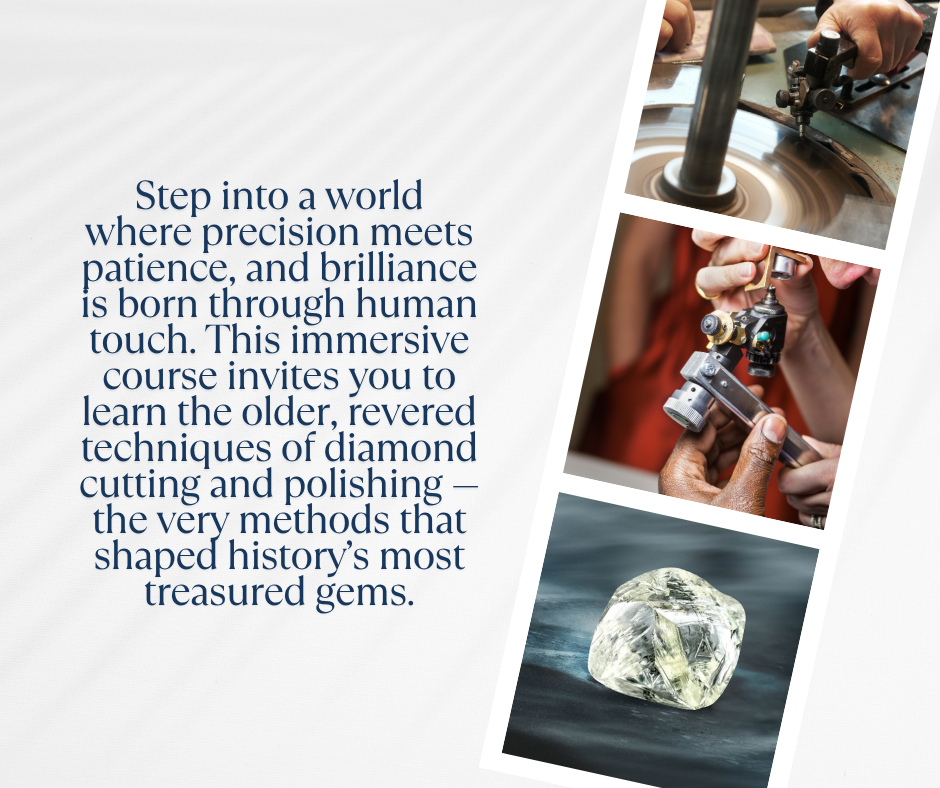
Our Diamond Cutting and Polishing Course gives you the skills to cut and polish diamonds with expert knowledge and hands-on learning.
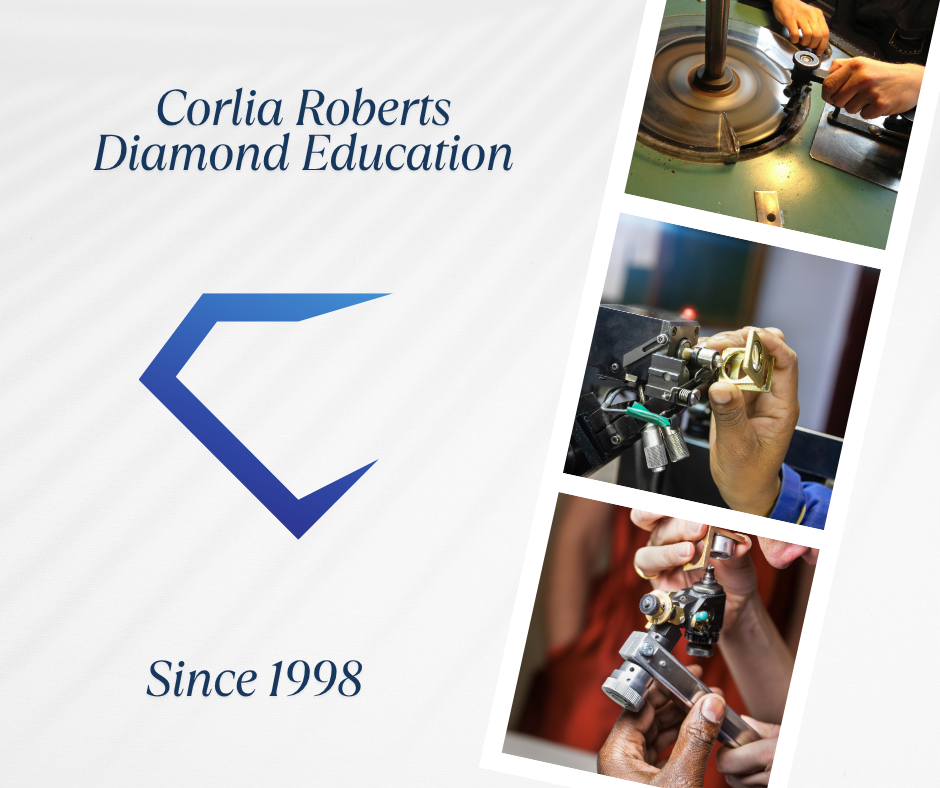
The Diamond Cutting Industry Today
The diamond cutting industry has evolved significantly over the years, with advancements in technology, shifts in market demand, and changes in global supply chains reshaping the sector. While traditional cutting centers still play a crucial role, new trends and challenges are emerging in response to market dynamics.
1. Major Diamond Cutting Centers
The world’s leading diamond cutting and polishing hubs include:
- India (Surat) – The largest diamond cutting and polishing hub, handling over 90% of the world’s rough diamonds, especially small to mid-sized stones.
- Belgium (Antwerp) – A historical diamond capital known for high-end and precision cutting.
- Israel (Ramat Gan) – A major center for advanced technology in diamond cutting, specializing in large and complex stones.
- China – Growing as a key player, particularly for mass-produced diamonds.
- Botswana & South Africa – Increasingly processing locally mined diamonds to retain more value within Africa.
- Dubai (UAE) – A rising player in diamond cutting, trading, and manufacturing, leveraging its tax-free zones, strategic location, and luxury market appeal.
DMCC and Dubai’s Diamond District
- The Dubai Multi Commodities Centre (DMCC) has played a significant role in making Dubai a global diamond trade hub, with its tax-free business environment attracting major diamond companies.
- The Dubai Diamond Exchange (DDE) facilitates trading between Africa, India, Europe, and Asia, connecting key rough and polished diamond markets.
2. Key Trends in Diamond Cutting
a) Advanced Technology Integration
- AI & Automation: Artificial intelligence is used for precision cutting, reducing waste and improving accuracy.
- Laser Cutting & Mapping: Modern lasers allow for ultra-precise cutting with minimal loss of rough material.
- 3D Scanning & Modeling: High-tech imaging tools help cutters determine the best possible shape for a diamond before cutting.
b) Sustainable & Ethical Cutting Practices
- With increased scrutiny over ethical sourcing, many diamond companies are focusing on responsible mining and cutting to ensure traceability.
- Botswana, Namibia, and South Africa have been investing in local cutting industries to create jobs and retain more profits from their resources.
c) Rise of Lab-Grown Diamonds
- Lab-grown diamonds are disrupting the cutting industry, as they require different processing techniques but offer greater consistency and fewer inclusions compared to natural diamonds.
- Many traditional cutting factories have started working with both natural and lab-grown diamonds to stay competitive.
3. Challenges Facing the Industry
a) Market Volatility
- The natural diamond industry has seen fluctuations in demand, partly due to economic conditions and changing consumer preferences.
- The rise of lab-grown diamonds has also introduced pricing pressures.
b) Labor & Skill Shortages
- While India remains dominant in diamond cutting, rising wages and a shift away from traditional craftsmanship pose challenges.
- Skilled diamond cutters are in demand, but many younger generations are less interested in entering the trade.
c) Increased Competition from Technology
- Automation has streamlined the cutting process, but it has also reduced the need for highly skilled manual cutters in some areas.
4. Future Outlook
- Greater reliance on AI and automation will improve efficiency and reduce material waste.
- Sustainability and ethical sourcing will continue to shape consumer preferences and industry practices.
- Shifts in cutting hubs—more African nations will likely process their own diamonds rather than exporting rough stones.
- Balancing tradition and innovation—while technology is advancing, expert craftsmanship will still be essential for cutting high-value diamonds.
The Diamond Cutting Industry in South Africa
South Africa has long been a major player in the global diamond industry, with a rich history dating back to the discovery of diamonds in Kimberley in the late 1800s. While the country remains a leading producer of rough diamonds, its cutting and polishing industry has faced challenges but continues to evolve with new government policies, technological advancements, and a push for local beneficiation.
1. Key Aspects of South Africa’s Diamond Cutting Industry
a) Local Beneficiation and Value Addition
- The South African government has encouraged local cutting and polishing to ensure that more of the diamond value chain remains within the country, rather than exporting rough stones to cutting hubs like India and Belgium.
- State initiatives like the South African Diamond and Precious Metals Regulator (SADPMR) and the Diamond Export Levy have been introduced to promote local processing.
- However, despite these efforts, a significant portion of rough diamonds are still exported, as local cutting operations struggle to compete with lower-cost centers like Surat, India.
b) Cutting and Polishing Hubs
- Johannesburg and Cape Town serve as the primary diamond cutting centers, with skilled artisans and state-of-the-art cutting facilities.
- Gaborone, Botswana, while not in South Africa, has become a key competitor in Southern Africa due to De Beers moving its rough diamond sales there, which has influenced South Africa’s cutting industry.
c) Focus on High-Value and Niche Markets
- Due to the higher labor and operational costs in South Africa, the industry focuses on cutting and polishing larger, high-value stones, rather than mass-processing smaller diamonds.
- Luxury brands and custom jewelry manufacturers seek South African expertise for precision cutting and rare diamonds.
d) Growth of Lab-Grown Diamond Processing
- With the rise of lab-grown diamonds, some South African cutting businesses are starting to process synthetic stones, offering an alternative to natural diamonds.
2. Challenges Facing the South African Cutting Industry
- High operational costs compared to India and China.
- Skilled labor shortages due to fewer young professionals entering the trade.
- Global competition, with many rough diamonds still being sent overseas for cutting.
- Regulatory hurdles, including export restrictions and compliance with diamond trade laws.
3. The Future of Diamond Cutting in South Africa
- Government support and incentives could boost local beneficiation and make South African cutting operations more competitive.
- Investment in automation and AI-driven cutting could help reduce costs and improve efficiency.
- Stronger integration with the global luxury market may position South Africa as a go-to destination for high-end and unique diamond cuts.
The Diamond Trading Industry in South Africa
South Africa has been a major player in the global diamond trade since the discovery of diamonds in Kimberley in 1867. Today, while much of the world’s rough diamond trade has shifted to hubs like Dubai, India, and Belgium, South Africa remains an important source of high-quality diamonds and a growing market for diamond trading and beneficiation.
1. Key Aspects of South Africa’s Diamond Trade
a) Rough Diamond Production and Export
- South Africa is one of the world’s top diamond-producing countries, with large-scale mining operations by companies like De Beers, Petra Diamonds, and Lucara Diamonds.
- The majority of rough diamonds mined in South Africa are exported to cutting hubs like India, Belgium, and China, where they are polished before being sold to global markets.
- Kimberley Process Certification is strictly enforced, ensuring that all traded diamonds are conflict-free.
b) Local Diamond Trading Hubs
- Johannesburg is South Africa’s main diamond trading hub, home to diamond dealers, trading offices, and auction houses.
- Cape Town and Pretoria also have diamond trading networks, particularly for luxury retail and private collectors.
- South Africa hosts diamond tenders and auctions, where large parcels of rough diamonds are sold to international buyers.
c) South Africa’s Diamond Exchanges and Regulations
- The South African Diamond and Precious Metals Regulator (SADPMR) oversees the industry, ensuring compliance with trade laws and beneficiation policies.
- The State Diamond Trader (SDT) was established to supply rough diamonds to local cutters and polishers, promoting beneficiation and job creation.
- Dealers and traders must obtain a diamond dealer license, which allows them to legally trade rough and polished diamonds within and outside South Africa.
d) Growth of Private and Online Diamond Trading
- More independent diamond dealers are entering the market, catering to investors, jewelry designers, and international buyers.
- The rise of online diamond trading platforms has enabled South African dealers to sell directly to buyers in Dubai, Hong Kong, and Europe, bypassing traditional middlemen.
- Lab-grown diamonds are starting to enter the local market, offering a new segment for traders and consumers.
2. Challenges Facing the Diamond Trade in South Africa
- Export regulations and restrictions can make trading more complex compared to tax-free hubs like Dubai.
- High operational costs impact local dealers and cutters.
- Competition from international markets, especially India and Botswana, which have established diamond trade incentives.
3. Future of South Africa’s Diamond Trade
- Increased focus on local beneficiation could strengthen the domestic diamond market.
- Integration with global digital diamond trading platforms will help South African traders access new buyers.
- Growing interest in investment diamonds may boost demand for high-quality stones.
South Africa remains a key player in the global diamond market, offering lucrative opportunities for traders, investors, and entrepreneurs. Whether you’re looking to enter the industry, secure a diamond dealer license, or connect with trusted sources for rough and polished diamonds, we’re here to help!
✨ Ready to start your diamond trading journey? Chat with us on WhatsApp to explore your options and find the perfect course or business solution for you.
Want to confidently identify, grade, and value rough diamonds like a pro? Our Rough Diamond Evaluation Course gives you the skills to navigate the diamond trade with expert knowledge and hands-on learning.

You must be logged in to post a comment.